
Blog
Organic Farming in India – The Future of Healthy Living

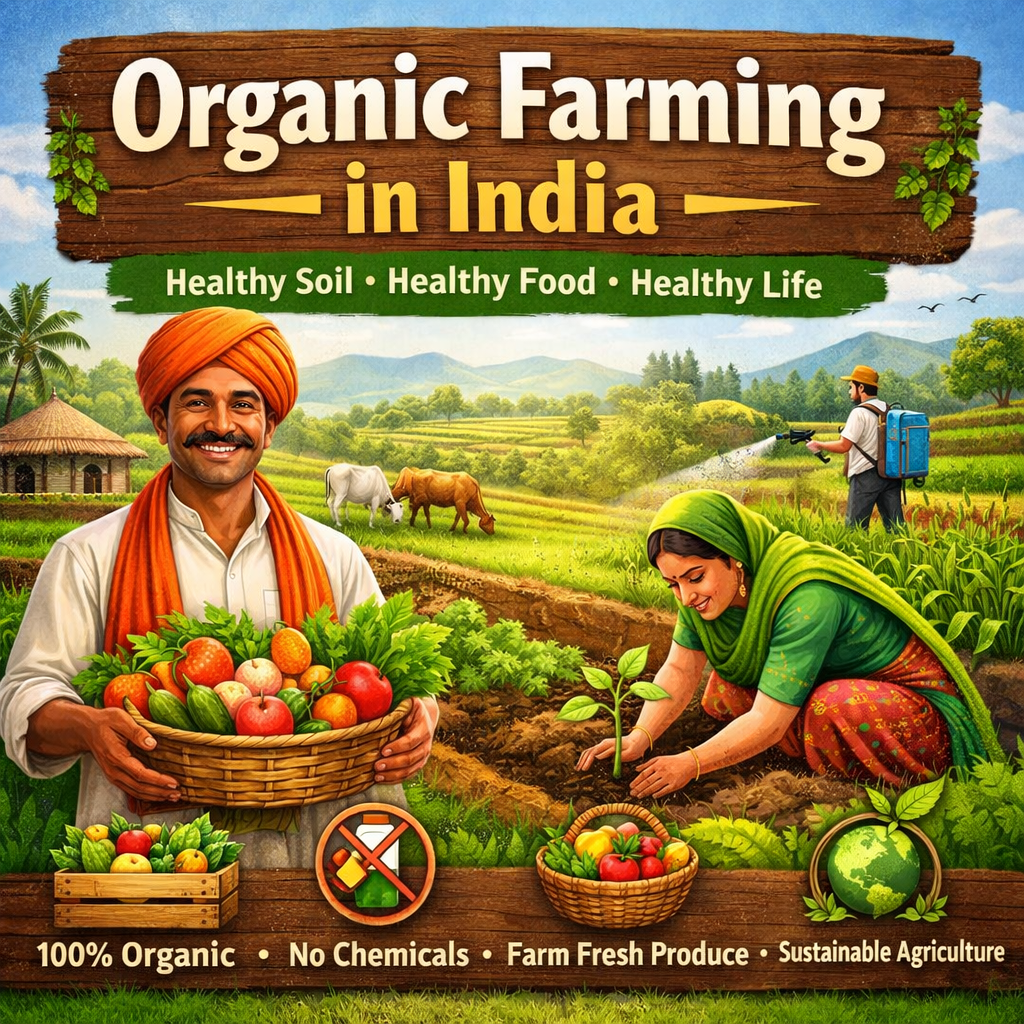
In today’s rapidly growing chemical-driven food system, health has become a priority for every family. This is where organic farming in India is gaining strong importance. At Farmers Basics, we directly source organic products from trusted farmers because we believe chemical-free food is not just better — it is essential for long-term health.
This article explains what is organic farming, its history, its growth in India, and how it is transforming modern agriculture.
What is Agriculture?
Before understanding organic farming, it is important to understand what is agriculture.
Agriculture refers to the cultivation of land for growing crops and raising livestock to produce food, fiber, and other essential products. Agriculture in India has been the backbone of the economy for thousands of years. A large percentage of India’s population depends directly or indirectly on agriculture land for livelihood.
India has:
- Large fertile agriculture land
- Strong support from the agriculture department
- Multiple agriculture university institutions promoting research and innovation
What is Organic Farming?
What is organic farming?
Organic farming is a method of agriculture that avoids synthetic fertilizers, pesticides, genetically modified organisms (GMOs), and harmful chemicals. Instead, it uses:
- Natural compost
- Crop rotation
- Bio-fertilizers
- Natural pest control
- Cow-based inputs (in traditional Indian methods)
Organic farming focuses on soil health, environmental sustainability, and chemical-free food production.
In simple words:
Organic farming means growing food naturally without harmful chemicals.
Origin of Organic Agriculture
Organic agriculture is not new. In fact, traditional Indian farming was always organic before chemical fertilizers were introduced during the Green Revolution in the 1960s.
India has been practicing natural farming for thousands of years. However, modern organic agriculture as a certified system started gaining popularity in India in the late 1990s and early 2000s.
Today, India is among the top countries in the world in terms of organic producers.
Organic Farming in India – Current Status
- India has over 2.7 million hectares of land under organic certification.
- Around 2–3% of total agriculture land is currently under certified organic farming.
- India has the highest number of organic farmers in the world.
States like:
- Madhya Pradesh
- Rajasthan
- Maharashtra
- Uttarakhand
- Sikkim (fully organic state)
are leading in organic farm development.
The agriculture department and agriculture university institutions are actively promoting organic and natural farming practices.
Changes Seen After Organic Farming
Over time, several positive changes have been observed:
1. Improved Soil Health
Organic farming improves soil fertility and increases beneficial microorganisms.
2. Better Crop Quality
Chemical-free vegetables and grains have better nutritional value and taste.
3. Environmental Protection
Reduction in soil and water pollution.
4. Health Benefits
Reduced exposure to harmful pesticides lowers health risks for consumers.
5. Sustainable Agriculture
Ensures long-term productivity of agriculture land without degrading it.
Why Farmers Basics Supports Organic Farming
At Farmers Basics, we directly source products from trusted organic farm partners because:
- Chemical-free food is safer.
- Organic products support farmer sustainability.
- Natural farming strengthens rural economies.
- Health is more important than short-term profits.
We personally verify sourcing practices and prefer farmers who follow organic agriculture and natural farming principles.
Our mission is simple:
Healthy Soil → Healthy Crop → Healthy Family
Organic vs Chemical Farming
| Organic Farming | Chemical Farming |
|---|---|
| Uses natural fertilizers | Uses synthetic chemicals |
| Improves soil health | Degrades soil over time |
| Eco-friendly | Pollutes soil and water |
| Healthier produce | Risk of pesticide residue |
In the long term, organic farming in India offers a more sustainable solution for agriculture in India.
Role of Agriculture Department and Agriculture University
The agriculture department promotes:
- Organic certification schemes
- Subsidies for farmers
- Awareness programs
Many agriculture university institutions conduct research in:
- Organic agriculture techniques
- Bio-fertilizers
- Sustainable crop systems
Government support is gradually increasing, encouraging farmers to shift towards natural farming.
The Future of Organic Farming in India
India has strong potential to become a global leader in organic agriculture because:
- Large agriculture land availability
- Growing health awareness
- Rising demand for chemical-free products
- Increasing export opportunities
Although only a small percentage of land is currently organic, the trend is steadily growing every year.
Conclusion
Organic farming in India is not just a trend; it is a return to our roots. It represents sustainable agriculture, improved soil health, and better food quality.
At Farmers Basics, we proudly support organic farming and natural farming practices because we believe that:
True wealth is health.
By choosing organic products, we support farmers, protect agriculture land, and build a healthier future for our families.